Interdigital Cysts (Furuncles)
What is an interdigital cyst?
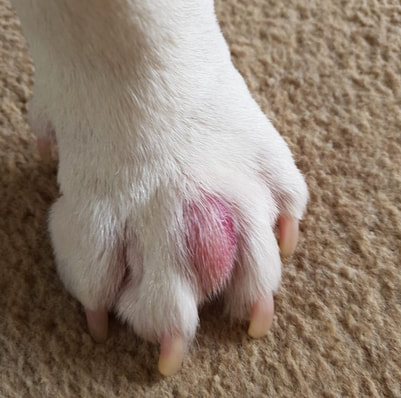
Interdigital cysts are painful lesion or growth found between dog toes. These irritating growths tend to represent pyogranulomatous inflammation and are generally not cystic, which is why they are properly known as interdigital furuncles. Some breeds, including the English Bulldog, are more prone to the development of interdigital cysts.
What causes interdigital cysts?
There are many different factors that can cause the development of these interdigital cysts. These factors include: an underlying infection, allergies, mites, ingrown hairs, or even the way the dog's foot is shaped. Recurring interdigital cysts could be a result of another underlying issue.
Signs of interdigital cysts include:
What are the treatment options for interdigital cysts?
First, it is important to find out what the underlying cause may be. Some interdigital cysts heal on their own and go away naturally. You may have your vet check out the interdigital cyst to confirm that it is indeed an interdigital cyst and not something more serious such as a tumor, mites, or mange.
Treatment options may include:
Interdigital cysts are painful lesion or growth found between dog toes. These irritating growths tend to represent pyogranulomatous inflammation and are generally not cystic, which is why they are properly known as interdigital furuncles. Some breeds, including the English Bulldog, are more prone to the development of interdigital cysts.
What causes interdigital cysts?
There are many different factors that can cause the development of these interdigital cysts. These factors include: an underlying infection, allergies, mites, ingrown hairs, or even the way the dog's foot is shaped. Recurring interdigital cysts could be a result of another underlying issue.
Signs of interdigital cysts include:
- A red bump/fleshy welt between toes
- A hairless bump
- An ulcerated sore
What are the treatment options for interdigital cysts?
First, it is important to find out what the underlying cause may be. Some interdigital cysts heal on their own and go away naturally. You may have your vet check out the interdigital cyst to confirm that it is indeed an interdigital cyst and not something more serious such as a tumor, mites, or mange.
Treatment options may include:
- Soaking paws in Epsom salts 2x each day
- Allergy testing followed by removing allergens from environment
- Regularly cleaning and shampooing paws
- Visiting a veterinary dermatologist specialist
- Diet change
- Anti-inflammatories or anti-fungal shampoos
- Surgical removal (worst case scenarios)