Entropion
What is Entropion?
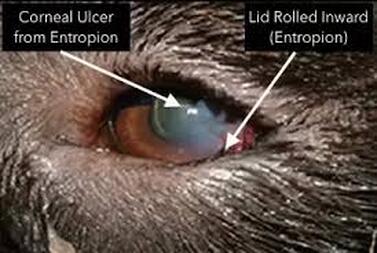
Entropion is a condition in which the dog's eyelid turns inward so that the eyelashes and skin rub against the eye surface. This condition can be found in any breed of dog, but is most common in dogs with wrinkled facial folds and drooping eyes such as Bulldogs, Shar-Peis, and Chows. Not all bulldogs have entropion, but it is common in the breed and we have had several dogs come through our rescue with this condition.
There are three types of entropion: inherited/genetic, spastic, and acquired. Inherited entropion is common in certain breeds. Spastic entropion occurs when there is a painful condition in the eye and can occur in any breed at any time in a dog's life. Acquired entropion is when the eyelids roll inward as a result of changes to the eye or muscles surrounding it.
There are three types of entropion: inherited/genetic, spastic, and acquired. Inherited entropion is common in certain breeds. Spastic entropion occurs when there is a painful condition in the eye and can occur in any breed at any time in a dog's life. Acquired entropion is when the eyelids roll inward as a result of changes to the eye or muscles surrounding it.
Signs and symptoms of Entropion
The most obvious sign of entropion is when you notice your dog's eyelid is turned inward. Sometimes this is obvious, but sometimes it can be hard to see if you don't know what you're looking for. Other symptoms include squinting, excessive tearing, pawing or rubbing the eye, photosensitivity, corneal ulcerations, or in some cases dark brown pigment formation on the cornea.
Some cases of inherited entropion will not show until a dog reaches at least 1 year of age.
Some cases of inherited entropion will not show until a dog reaches at least 1 year of age.
How is Entropion treated?
If you can see that your dog's eyelid is turned inward you will definitely want to schedule an appointment with your veterinarian. Eye ointments may be prescribed in order to help lessen the discomfort that the fur and eyelashes may be causing to the dog's eye. However, ointments should only be a temporary solution as you do not want to cause more damage to the eye or even a loss of vision!
The vet will perform a surgery to correct the entropion. A section of skin is removed from the affected eyelid in order to reverse the inward rolling. Ophthalmic medication and antibiotics may be sent home with the dog in order to help treat any possible secondary problems that have developed and in order to protect the cornea. In some cases, a dog may have to undergo more than one surgery to correct the issue.
The vet will perform a surgery to correct the entropion. A section of skin is removed from the affected eyelid in order to reverse the inward rolling. Ophthalmic medication and antibiotics may be sent home with the dog in order to help treat any possible secondary problems that have developed and in order to protect the cornea. In some cases, a dog may have to undergo more than one surgery to correct the issue.
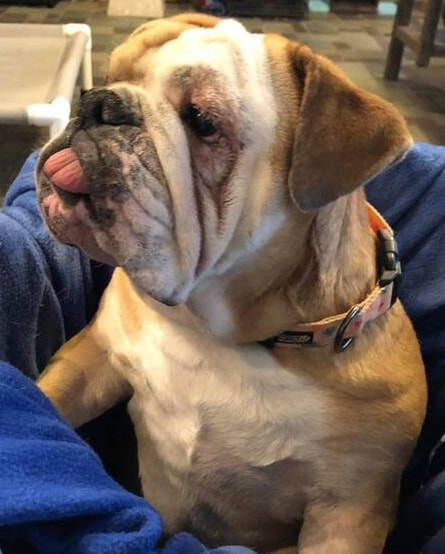
Remi before entropion surgery
|
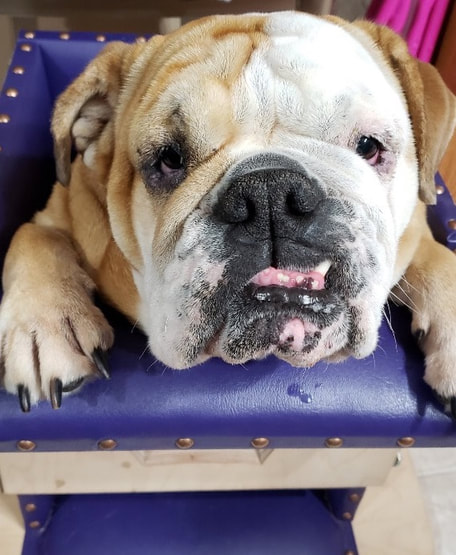
Remi after entropion surgery
|